

Bunion Pain: Causes and Treatment (2026 Guide) │ Foot Factor
Monday, October 12, 2026
Bunion Pain: Causes and Treatment
Why does your bunion hurt badly some days but barely bother you on others? The bump remains the same but the pressure around the joint varies.
The good news is that some of the triggers of bunion pain are manageable. Know the bunion pain causes so you can choose the right bunion treatment options.
The Quick Answer: What Causes Bunion Pain
So, why do bunions hurt? There’s no single answer.
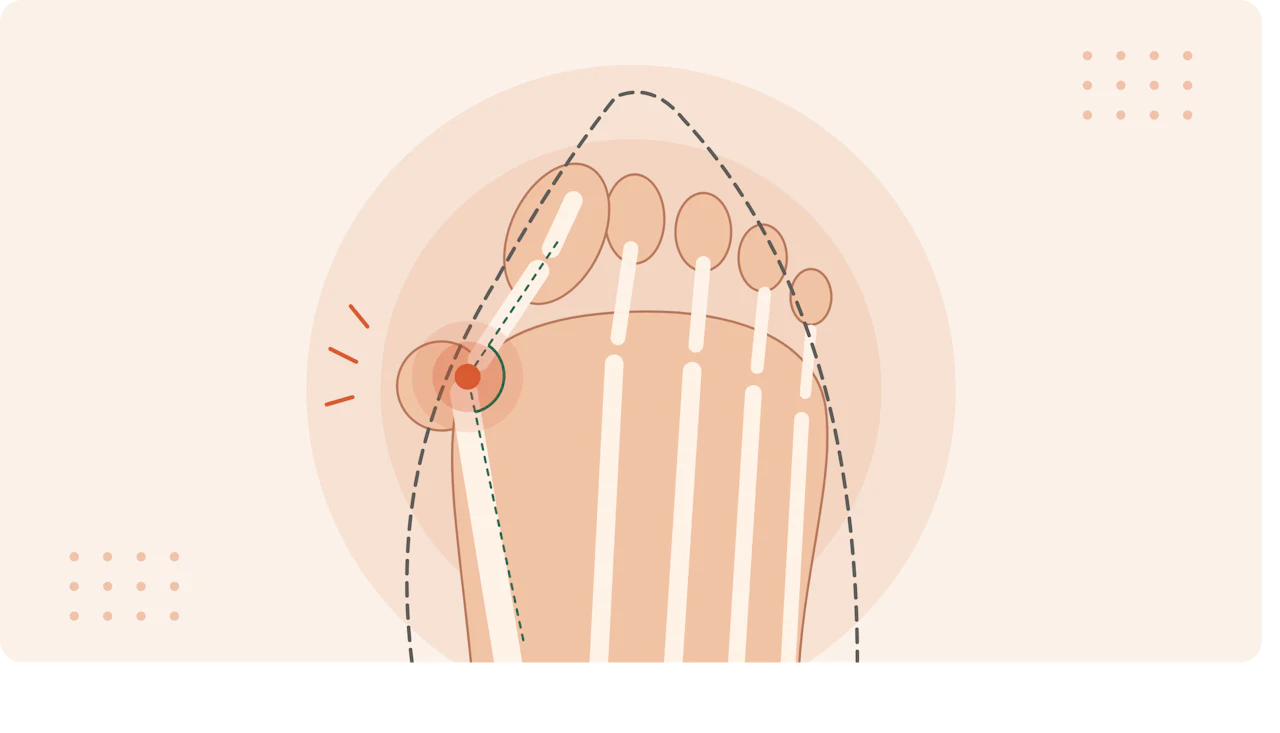
A bunion develops when the big toe gradually moves towards the other toes and the joint at its base starts to stick out. Once that happens, the exposed joint can rub against your shoes, become swollen and stiff, and hurt when you walk.
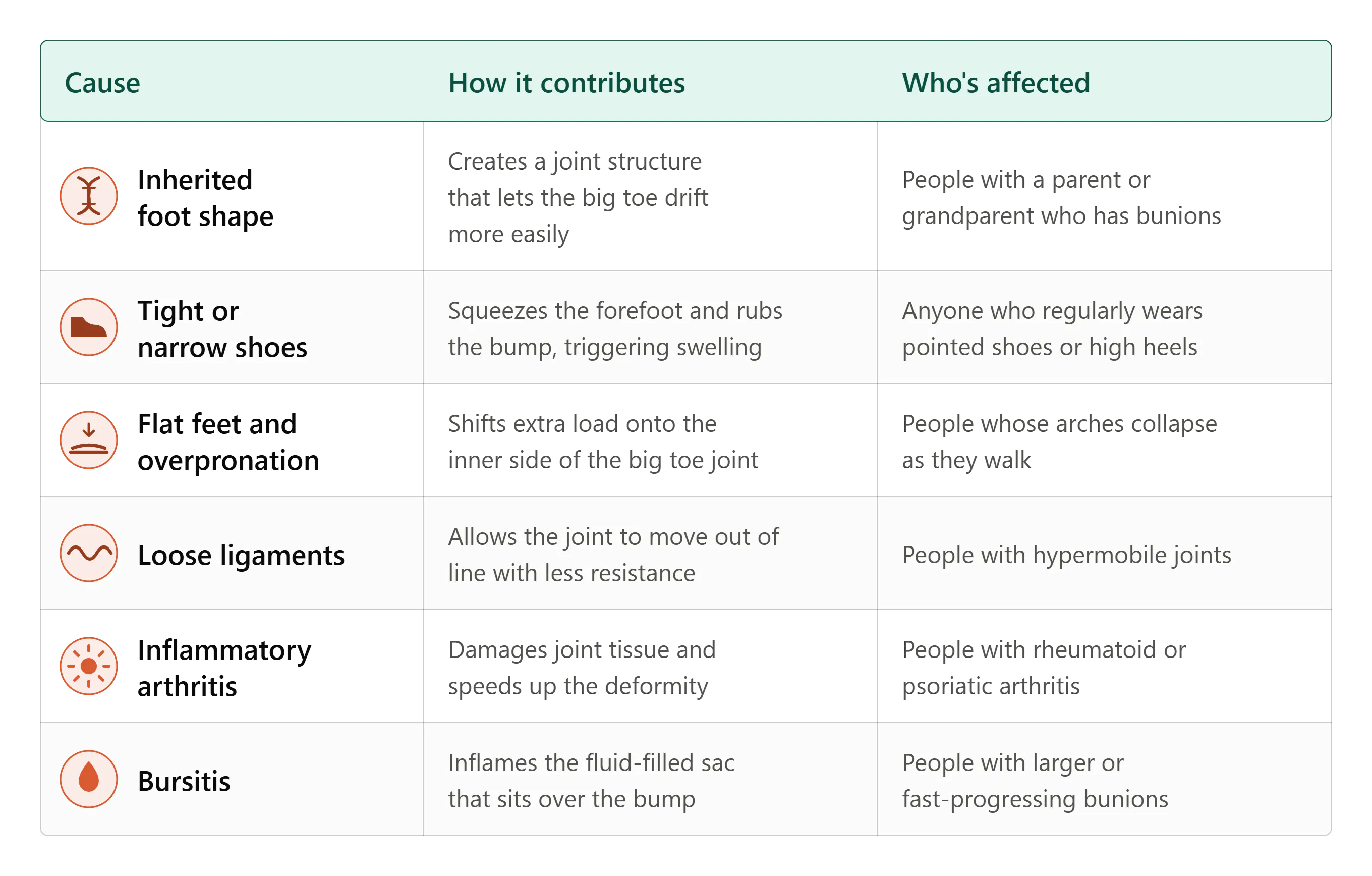
Your foot shape, footwear, the way you walk and certain health conditions all play a part. Some of these factors overlap with other foot problems.
Genetics and Foot Shape
So, are bunions genetic? In many cases, yes. Up to 90% of people with bunions report having a family history, which suggests that inherited foot structure can make the big toe more likely to drift.
Footwear and Pressure
Narrow shoes rarely create a bunion on their own, but bunions from tight shoes hurt more. Women, who wear narrow styles more often, develop bunions at more than twice the rate of men (around 30% compared with 13%).
Underlying Foot Mechanics
Bunions affect around 23% of adults aged 18 to 65 and nearly 36% of people over 65. As the foot takes the same load repeatedly over many years, problems such as flat feet and overpronation can add to the strain around the joint.
Non-Surgical Ways to Manage Bunion Pain
You can’t straighten an established bunion without undergoing surgical operation. But simple changes make your food much more comfortable. Address the symptoms early so it’s easier to manage the symptoms.
Some of the most practical options for bunion pain relief at home include:
- Wearing shoes with a wide, deep toe box and a low heel.
- Placing a gel or felt pad over the bump to reduce friction.
- Using a silicone toe spacer between the big toe and second toe.
- Applying an ice pack wrapped in a towel for 15 to 20 minutes after a long day on your feet.
- Taking over-the-counter painkillers, such as paracetamol or ibuprofen, when appropriate.
- Stretching and strengthening the muscles that control the big toe.
Footwear Changes
Switching to better fitting footwear makes a noticeable difference. The best shoes for bunions have a wide toe box to allow your toes to spread out. Look for a soft upper and a low heel and materials such as knitted fabrics, mesh, and leather.
Find ones that have laces or adjustable straps to keep your foot in place instead of sliding forwards and pushing against the front of the shoe.
Padding, Splints, and Orthotics
Pads cushion the bump against shoe pressure, while splints aim to hold the toe straighter, usually overnight. Ask most podiatrists about bunion splints, do they work, and you’ll hear the same answer: they can ease stiffness, but they don’t permanently straighten the toe. Bespoke orthotics take a different approach by correcting how your foot loads, which reduces strain on the joint and can slow the deformity. For many people, orthotics offer the most lasting benefit of the three.
When Conservative Care Stops Being Enough
Conservative care works well for mild to moderate bunions, but it has limits. If the pain keeps you awake, stops you walking comfortably or keeps worsening despite good shoes and orthotics, the joint may need a surgical opinion. Numbness, a red and hot joint, or a second toe crossing over the big toe also deserve prompt attention. A podiatrist can help you judge when you’ve reached that point.
Conservative Care vs Bunion Surgery
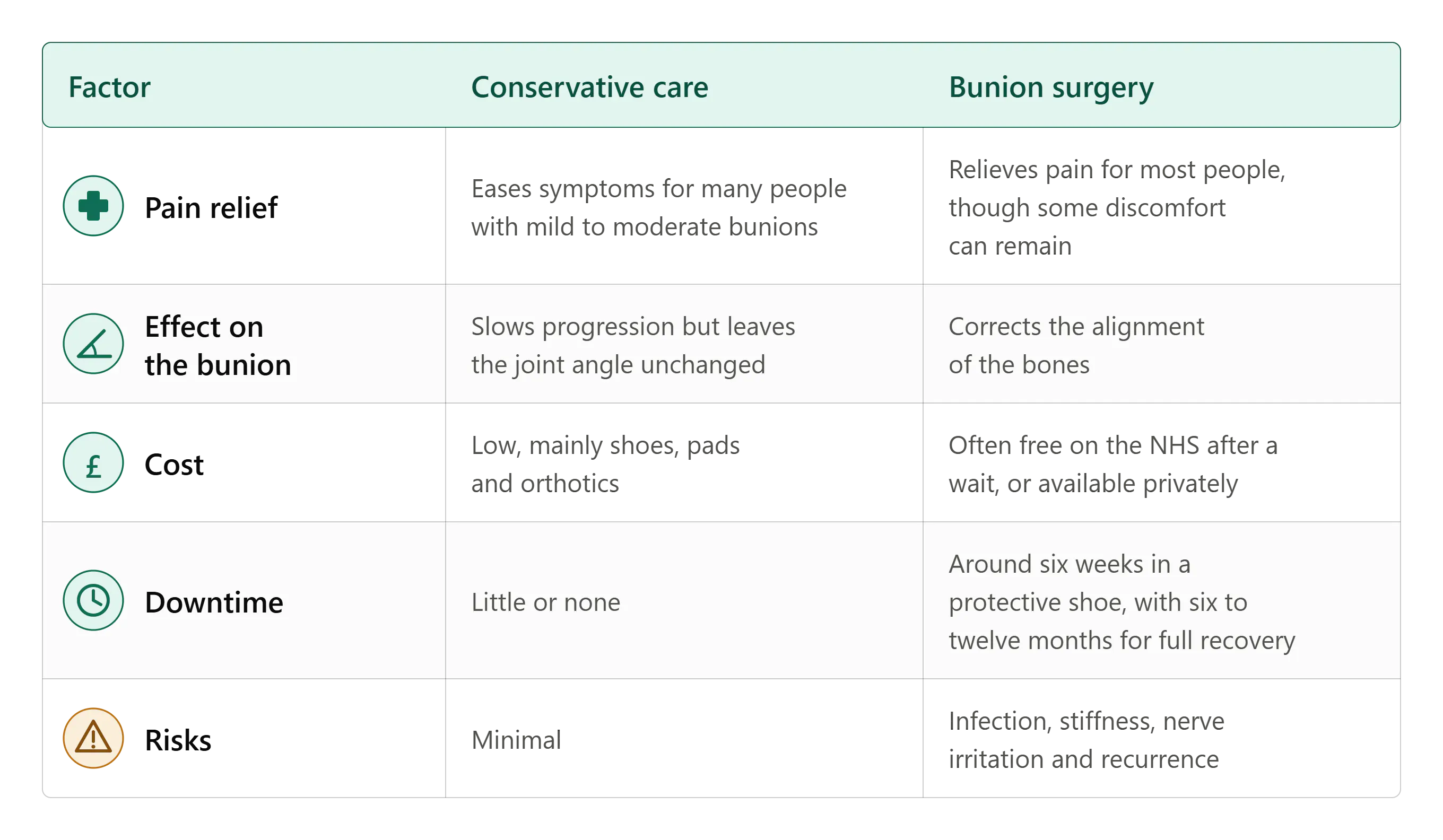
The choice between conservative treatment vs bunion surgery depends on how much the bunion limits your life, not just how it looks. The table below compares both routes across the factors that matter most to patients. So, is bunion surgery worth it? For people whose pain persists despite good conservative care, it often is, but the recovery demands real commitment.
What Conservative Care Realistically Achieves
Conservative care won’t make a bunion disappear, but it can still transform how your foot feels day to day. Realistically, it can:
- Reduce daily pain and swelling around the joint.
- Protect the skin over the bump from rubbing and hard skin.
- Slow the rate at which the big toe drifts.
- Improve how your foot takes load as you walk.
- Help you delay surgery or avoid it altogether.
What Surgery Involves and Typical Recovery
Bunion surgery realigns the bones of the big toe, usually by cutting and repositioning them and fixing them with small screws or plates. Most people go home the same day and wear a protective shoe for around six weeks. The typical bunion surgery recovery time runs to six months or more before the swelling fully settles. As for bunion surgery cost in the UK, the NHS covers the operation when pain seriously affects daily life, while private fees vary by surgeon, hospital and technique.
Signs Your Bunion Needs Professional Assessment
Self-care has its place, but certain signs tell you it’s time for a professional opinion. Arrange an assessment if any of the following sounds familiar:
- Your pain lingers even after you switch to wider, softer shoes.
- The bump grows larger or the toe drifts further over the months.
- Walking, standing or exercise becomes difficult.
- The skin over the joint turns red, hot or broken.
- Your second toe starts to curl, cross over or develop a painful corn.
- You feel numbness or burning around the big toe.
If you’re also unsure why your feet hurt when you walk more generally, an assessment can uncover problems beyond the bunion itself.
Pain Persists Despite Footwear Changes
If bunion pain continues after several weeks in wider, supportive shoes, your foot mechanics likely need a closer look from a podiatrist.
The Joint Is Visibly Worsening Over Time
A bunion that grows noticeably or pushes the big toe further across the foot needs assessment before the deformity becomes harder to manage.
Pain Is Affecting Your Walking or Daily Activity
Once pain starts to dictate how far you walk, what you wear or whether you exercise, professional treatment can help you regain comfort and confidence.
Struggling With Bunion Pain? Book a Podiatry Assessment
Our podiatrists in London assess your gait, foot mechanics and footwear to match you with the right bunion treatment options, including bespoke orthotics, so book your free initial consultation today.
Frequently Asked Questions
Can bunions be reversed without surgery?
No. Correcting the underlying bone alignment through surgery is necessary once bunion has already developed. Conservative treatment still helps manage the symptoms.
What is the fastest way to relieve bunion pain?
Take the pressure off the joint. For example, wear shoes with a wide, soft toe box.
When is bunion surgery necessary?
Surgery is often the best option if pain affects your daily life and the usual treatment no longer offers relief.
Do bunion splints actually work?
Splints can help minimise the discomfort and stiffness. But it can’t correct or reverse the bunion.
What shoes are best for people with bunions?
The best shoes for bunions have plenty of room around the toes, a wide and deep toe box, and a low heel.
Are bunions hereditary?
Yes, genetics is one of the main factors in what causes bunions. Wear supportive footwear and get advice early if this condition is common in your family.
How long does it take to recover from bunion surgery?
Most people spend around six weeks in a protective shoe and full recovery takes between six to twelve months.
Can a podiatrist help before surgery is needed?
Yes. A podiatrist can often help manage bunion pain long before surgery needs to be considered.