

What Is Overpronation?
Friday, August 28, 2026
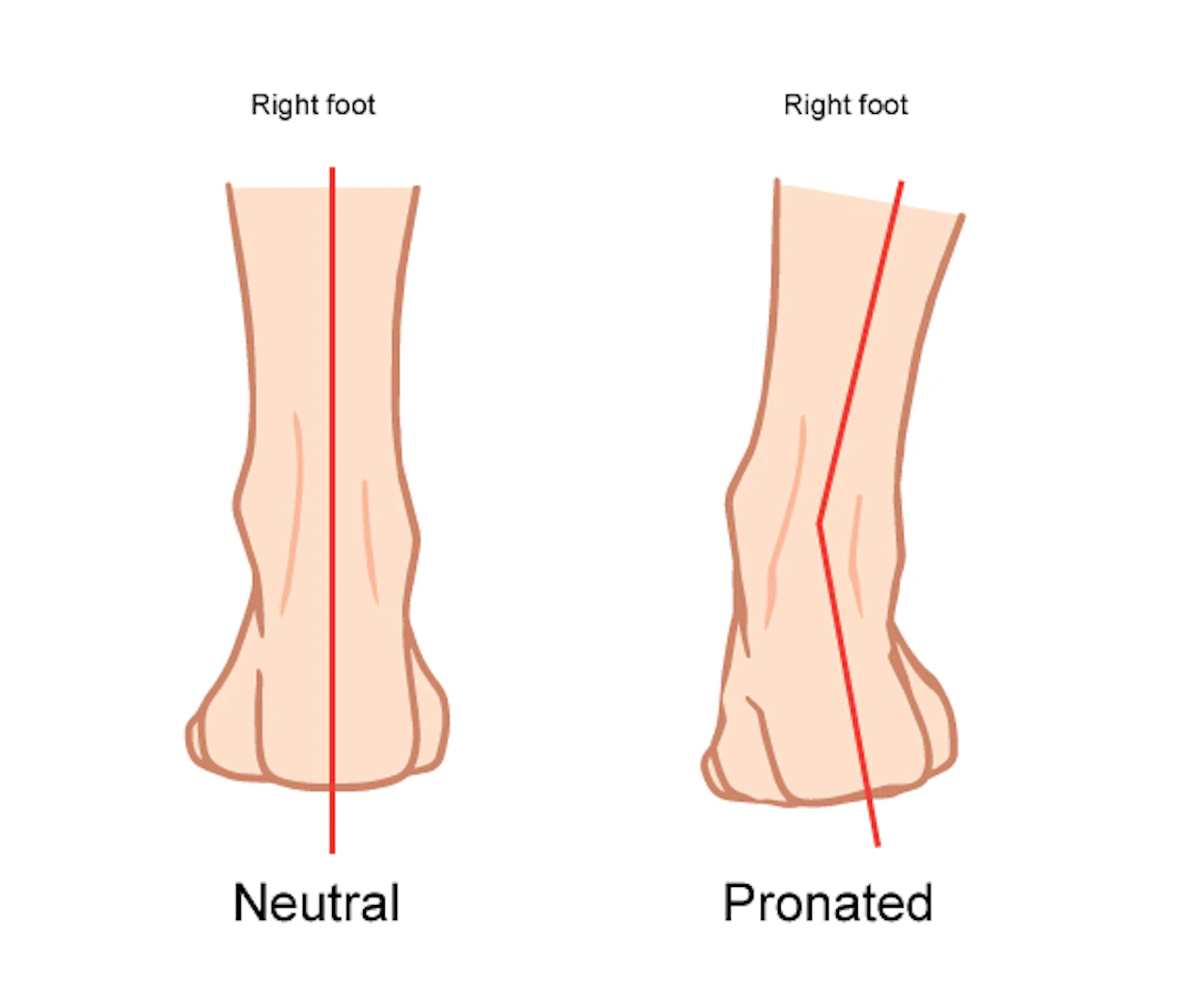
Do your running shoes wear out fastest along the inner edge, or does your knee ache after long hours on the road? These are common signals of overpronation. Today, we'll discuss this condition, explain its causes and possible treatments.
Overpronation happens when this inward roll goes beyond the normal range, placing extra strain on the arch, ankle, and the joints further up the leg. It is a common gait pattern podiatrists assess, particularly among runners logging regular mileage.
Normal Pronation vs Overpronation
Normal pronation involves a controlled inward roll of around fifteen per cent before the foot begins pushing off again. Overpronation exceeds this range, continuing to roll inward well past the point where the foot should start stabilising for push off.
How Common Is Overpronation
It affects most runners and walkers and accounts for some of the limb running injuries seen in clinic. There's a close relationship between overpronation and flat feet, though footwear and running form influence how obvious the pattern becomes — see our guide to arch support for flat feet.
When Overpronation Needs Medical Attention
Persistent pain that continues even with rest, or a sudden change in how your foot feels during activity, demands proper assessment. Early intervention prevents tendon strain or joint irritation.
Symptoms of Overpronation
Overpronation pain presents differently depending on training volume, footwear, and how far the foot rolls beyond the normal range. Here are the most common characteristics:
Foot, Knee, and Hip Pain
Pain often shows up well beyond the foot itself, particularly around the knee and hip. This happens as the lower leg rotates inward more than usual, placing uneven stress on the joints that were not designed to absorb it repeatedly. Many runners first notice overpronation knee pain before connecting it to how their foot strikes the ground.
Uneven Shoe Wear on the Inner Sole
One of the most common signs of overpronation is a shoe that wears down faster along the inner edge of the sole. Runners who replace shoes frequently sometimes miss this clue because the wear never becomes obvious.
Flat Feet and Arch Collapse
Overpronation and flat feet are closely linked. Addressing one often improves the other, particularly when supportive footwear or orthotics are introduced. Arch collapse becomes more noticeable when your feet are under pressure, such as when running or standing for long periods.
What Causes Overpronation
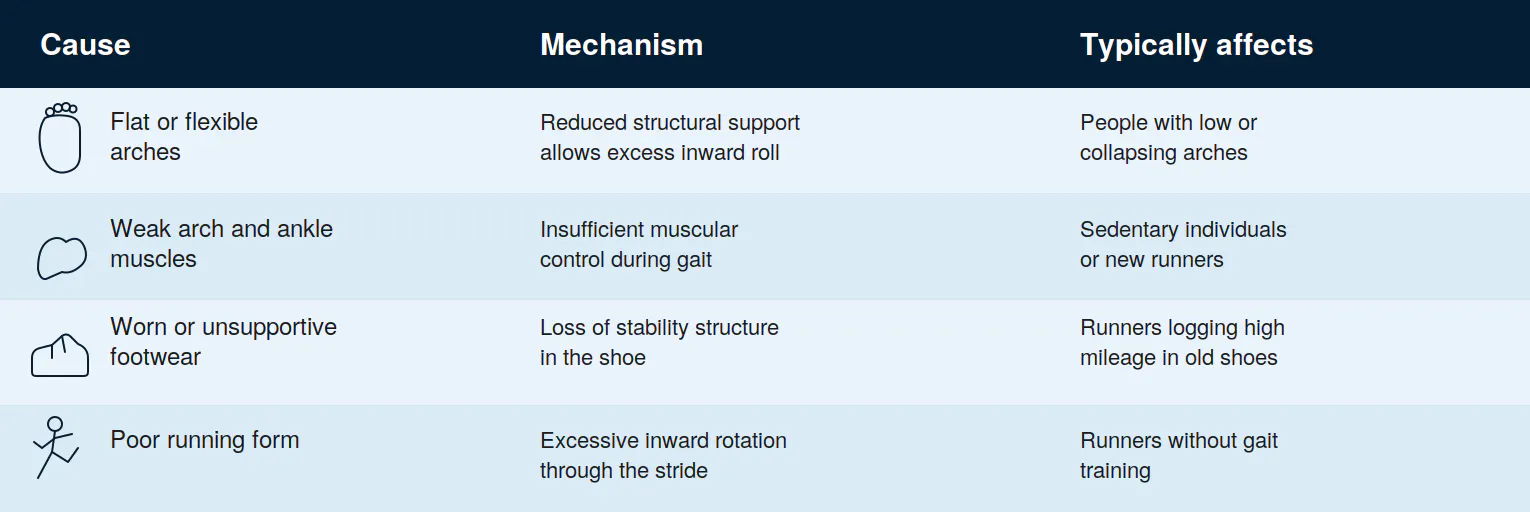
Various factors are at play and understanding which applies affects the right treatment approach. The table below maps common causes against their typical mechanism and who tends to be affected.
Flat Feet and Weak Arch Muscles
Structural factors play a major role in overpronation, and flat or highly flexible arches are among the most common underlying causes seen in clinic.
Poor Footwear and Running Form
Old and worn out trainers lose their supportive structure over time, allowing the foot to roll further inward than the shoe was originally designed for. Running form also matters since a step with too much inward rotation adds to the mechanical strain already present from arch structure. Addressing footwear age and form together produces more noticeable improvement — read more in is under/over pronation the cause of running injuries.
How to Check and Treat Overpronation
You can identify if you have overpronation at home or a clinical visit, though a proper assessment gives the clearest picture of severity and the right treatment path. The following steps combine simple self-checks with the treatment options most commonly recommended.
Self-Check Tests (Wet Footprint, Shoe Wear)
A simple wet footprint test at home, comparing your print against a typical arch shape, offers a useful starting point before booking a formal assessment.
Stability Shoes and Orthotics
Stability shoes and properly fitted orthotics & insoles correct much of the excess inward roll, reducing strain through the foot, knee, and hip over time. Runners in particular benefit from running & trail orthotics designed for repetitive impact.
When to See a Podiatrist or Physical Therapist
Persistent pain despite footwear changes, or a self-check suggesting overpronation, is a signal that professional gait analysis would help.
Not Sure If You Overpronate?
A proper professional gait analysis shows how far your foot rolls during walking or running, and whether custom orthotics for overpronation or a footwear change would make a difference — explore our custom insoles. Booking a free consultation with a podiatrist gives you a clear, tailored, and evidence based plan.
Call or email Foot Factor to arrange your assessment and get back to training with confidence.
Frequently Asked Questions
What is overpronation?
Overpronation is when the foot rolls inward more than the normal range and is common among runners and walkers.
What causes overpronation?
Common triggers are flat or flexible arches, running form, weak supporting muscles, or worn out footwear that no longer provides adequate stability.
How do I know if I overpronate?
Self-evaluations involve a wet footprint test or a check of the wear pattern on your shoes, offering a useful starting point. A professional gait analysis confirms the pattern precisely and measures its severity.
Is overpronation bad?
Mild overpronation is normal, but a more pronounced one is concerning if it comes with persistent pain, recurring injury, or uneven strain through the knees and hips.
Can overpronation be corrected?
Yes, it can be improved, though the underlying foot structure that drives it cannot be changed. For most people, correction means restoring comfortable, pain free movement.
What shoes are best for overpronation?
Stability shoes with reinforced arch support and structured midsoles resist the excess inward roll more effectively than neutral trainers. Some cases require custom orthotics, too. A podiatrist identifies the right combination based on arch height, training volume, and existing symptoms.
Does overpronation cause knee pain?
Yes, it places uneven stress on the knee joint, particularly during running or repetitive activity.
What's the difference between overpronation and supination?
Overpronation means your foot rolls inward more than usual when walking, and is common to those with flat feet. Supination is the opposite and those with high arches are affected. Both patterns increase injury risk differently.