

Flat Feet: Symptoms, Causes & Treatment
Thursday, August 27, 2026
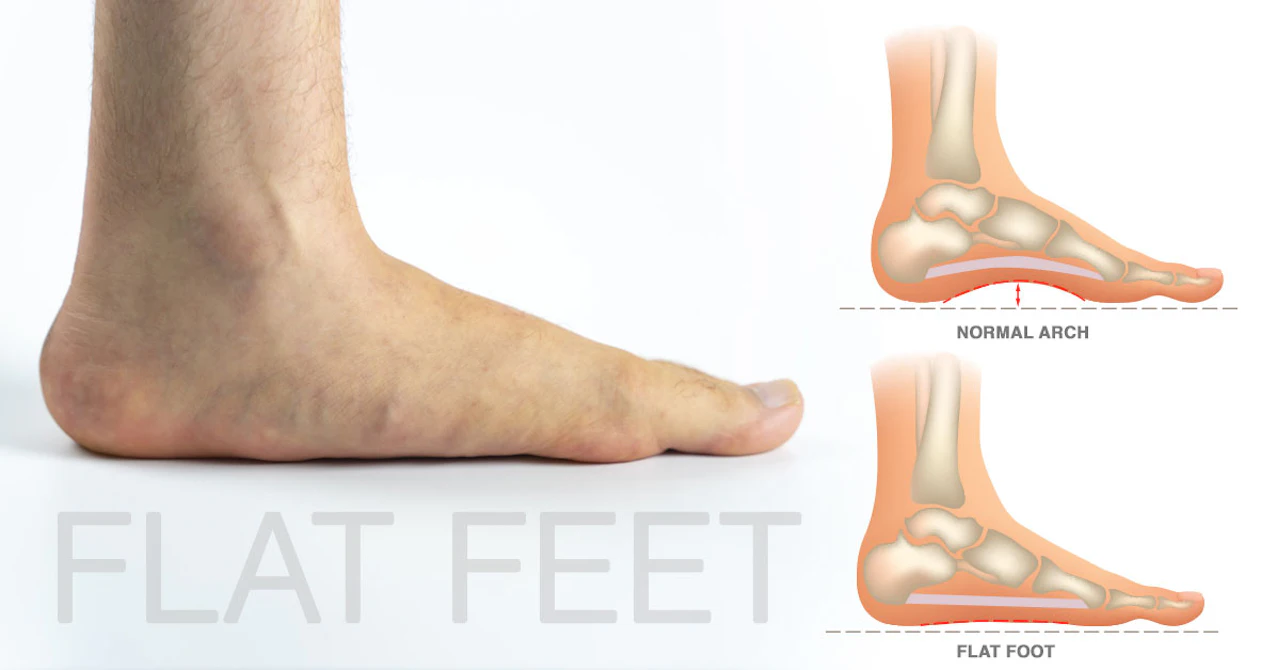
Your feet endure pressure everyday, especially if you spend hours standing, walking, or running. But it's a whole different story if you also notice uneven shoe wear. Flat feet affect your feet movement and shock absorption, which could lead to your left or right shoe wearing down more quickly than the other. Do you feel pain in the arch or see changes in the way you walk? These subtle signs can be easy to overlook, especially if your feet do not hurt all the time.
Here are the symptoms, causes and all that you must know before visiting a specialist.
What Are Flat Feet?
Flat feet (pes planus) refers to a low or non-existent arch along the inside of the foot when standing. Sometimes it's inborn. Other times it comes on later in life. It's a slight cosmetic issue for some, while others live with chronic pain. Common characteristics include:
- Low or no arch when standing
- Pressure unevenly distributed across the sole
- A tendency towards flat feet from overpronation when walking or running
Flexible vs Rigid Flat Feet
Flat feet are either flexible or rigid. The first one is common among patients and shows as a flat feet when lifted above ground but flatten under weight. The second type is when the feet remain flat whether it's bearing weight or not and points to a bone related cause.
How Common Are Flat Feet
One in four adults have flat feet to some degree, though some never encounter pain or need treatment. It's common in children, but most develop the arch between the ages of five and ten.
When Flat Feet Need Medical Attention
See a doctor immediately if pain or numbness persists. Early detection and proper treatment prevent complications like nerve or tendon problems. Don't let a treatable and manageable condition turn into a major irreversible medical problem.
Symptoms of Flat Feet
There are different degrees of flat feet pain. What feels painful to you may not be for others. Some don't feel any discomfort even after spending hours standing or walking while you suffer from aching, tiredness and stiffness.
There are recognisable signs of flat feet. Knowing what to look for gives you an idea if your feet are just tired or if you need to go to a specialist.
Foot and Arch Pain
You feel pain along your arch or the inside of your ankle. It's more noticeable after standing for hours at work or during exercise, then eases once you get some rest. As the day goes on, that dull ache spreads towards your heel or the ball of your foot.
Swelling Along the Inside of the Ankle
Mild swelling near the inner ankle bone means the posterior tibial tendon is handling extra strain. This part of your feet supports the arch. Your foot works harder because of insufficient structural support. Talk to a specialist right away if it continues.
Uneven Shoe Wear and Gait Changes
Do your shoes wear down faster on the inner edge of the sole? Does your spouse, sibling, or parent tell you that you're walking funny and different than you usually do? It happens when your foot rolls inward more than it should when you walk, a pattern often confirmed through a proper gait analysis and called flat feet from overpronation.
What Causes Flat Feet
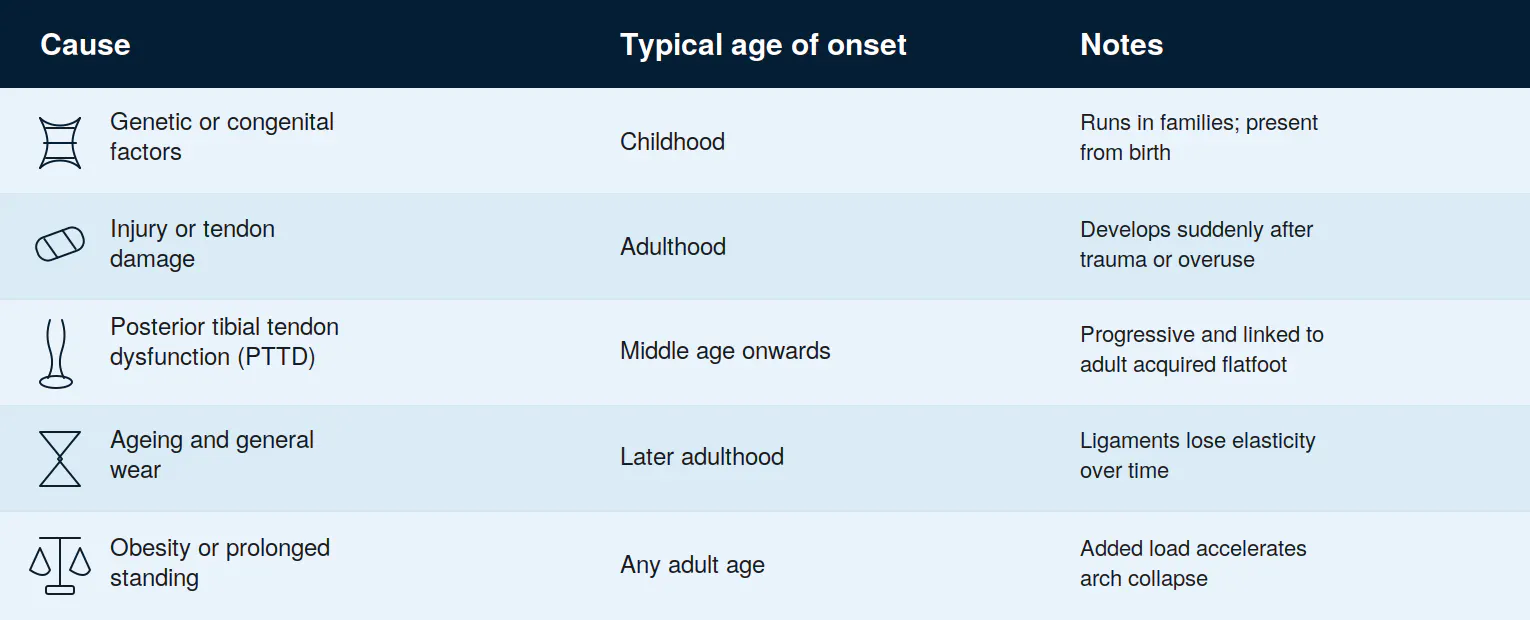
Flat feet develop for a range of reasons, from genetics to ageing. The cause shapes what treatment makes sense. Check the table below.
Genetic and Congenital Causes
Are flat feet genetic? Yes, in some cases. You may have one too if your parents and other relatives have this condition. Some children's arches never fully develop, while others catch up naturally through their early school years.
Acquired Causes (Injury, PTTD, Aging, Obesity)
Other patients have adult acquired flatfoot. Sometimes, it progresses gradually just like what happens when walking or running for long hours causes damage to the posterior tibial tendon. Ageing ligaments and excess body weight add extra load to the arch, increasing the possibility of developing a flatfoot over time. Being upfront about these causes matters, since they respond differently to treatment than congenital flat feet. For related strain patterns, see our guide on plantar fasciitis and arch pain.
Flat Feet Treatment Options
Treatments start with non-surgical approaches for pain relief and management. The right combination depends on how severe the symptoms are, the cause, and how much the condition affects daily activity.
- Supportive footwear and custom orthotics for flat feet to distribute pressure evenly and fix alignment
- Physical therapy to strengthen the muscles supporting the arch
- Flat feet exercises to build tolerance and reduce fatigue
Non-Surgical Treatment (Orthotics, PT, Footwear)
Orthotics, supportive shoes, and targeted physical therapy work well for most people with flat feet, particularly custom insoles built around your specific foot shape. This way, patients don't have to go through invasive medical procedures.
When Surgery Is Recommended
Specialists put surgery on the table if conservative treatment fails to control pain or there's already significant structural damage to the foot.
Home Care and Stretching Exercises
Perform calf and arch stretches regularly to ease tension and support better foot mechanics.
Not Sure If Your Flat Feet Need Treatment?
Professionals suggest custom orthotics for flat feet if the result of your biomechanical podiatry assessment shows that the reasons behind your condition call for such a treatment. A podiatrist creates a treatment plan based on your foot type, activity level, and how long you have been suffering from this condition. At Foot Factor, our podiatrists assess arch structure before recommending treatment.
FAQs
What are the symptoms of flat feet?
Here are the common signs to watch out for: ankle pain, weakness after prolonged standing, swelling in your inner ankle, uneven wear on shoes, and changes in gait.
What causes flat feet?
Flat feet result from either genetics or factors that develop later in life, such as injury, tendon dysfunction, or ageing.
Can flat feet be corrected?
Flat feet cannot always be permanently reshaped, but symptoms can be managed effectively and function significantly improved through orthotics, supportive footwear, and targeted exercises that address the pain and mechanical strain flat feet cause, even if the arch itself does not change shape.
Are flat feet hereditary?
Yes, it's a common concern but it may also develop later in life.
Do flat feet get worse with age?
Yes, if the cause is acquired. Ligaments naturally lose some elasticity over time, and conditions like posterior tibial tendon dysfunction tend to progress gradually if left unaddressed.
What is the best treatment for flat feet?
The most effective approach usually combines supportive footwear, custom orthotics, and physical therapy tailored to the individual. There is no single best treatment. A proper assessment determines which combination of these options brings the most relief for your situation.
Do flat feet need surgery?
Most people with flat feet do not need surgery. There are non-surgical approaches to ease symptoms and improve comfort.
Are flat feet in children something to worry about?
Usually not. Flat feet in children are common but the arch usually develops as they grow. However, have your child assessed if they complain of discomfort, tire easily during physical activity, or develop an unusual walking pattern.