

Best Podiatrist in London: How to Choose One
Wednesday, July 29, 2026

Choosing a podiatry clinic in London can feel confusing once you start comparing clinics, qualifications and price. This guide sets out the checks that actually matter, from HCPC registration to clinic reviews, so you can book with clear expectations rather than guesswork. Read on for the quick checklist, then the detail behind each point.
What to Check Before Booking
Before booking anything, run through five checks: registration, specialism, reviews, cost clarity and red flags. Each check tells you something different about a clinic, and together they separate a properly qualified practitioner from someone operating without proper oversight. Most of these checks take less than five minutes and rely on public information, including the HCPC register and published clinic reviews. The table below sets out what to check, why it matters, and how to verify it before your appointment.
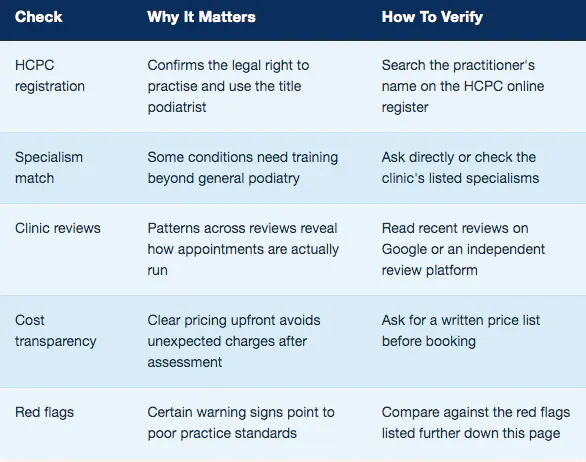
HCPC Registration: Non-Negotiable
Practicing under the title podiatrist without HCPC registration is a criminal offence in the UK, so registration status is the first and most basic check to make before booking with a podiatrist.
Specialism Matching Your Condition
Podiatrists commonly hold additional certificates in areas such as sports injuries, diabetic foot care or biomechanics, and matching that specialism to your condition affects how relevant the gait and biomechanical assessment will be.
Qualifications and Credentials to Look For
Qualifications separate a trained podiatrist from someone offering foot care without formal training or oversight. The list below covers what to check before your first appointment.
- HCPC registration number, checkable on the public register
- A recognised podiatry degree from a UK-accredited course
- Membership of a professional body such as the Royal College of Podiatry
- Additional certification relevant to your condition, such as sports injuries or diabetic foot care
- A clear description of experience treating your specific concern
HCPC Registration Explained
HCPC stands for the Health and Care Professions Council, the body that regulates podiatrists alongside professions such as physiotherapy in the UK. Registration requires a recognised qualification and ongoing compliance with published standards of conduct and proficiency. The register is searchable by name and free to use, and it confirms whether someone currently holds the legal right to practise and use the title podiatrist.
Podiatrist vs Chiropodist
Podiatrist and chiropodist describe the same regulated profession in the UK, with podiatrist now the more commonly used and internationally recognised term. Both titles require HCPC registration, so neither one on its own indicates a difference in qualification or scope of practice. Older clinics or practitioners sometimes still use chiropodist, particularly for routine foot care such as nail cutting or callus treatment. Our guide on chiropodist vs podiatrist breaks this down further.
Additional Certifications (Sports, Diabetic Care, Biomechanics)
Beyond the core qualification, many podiatrists complete further training in specific areas such as sports injuries, diabetic foot management or biomechanical assessment. A podiatrist with sports-specific training is generally better placed to manage conditions like plantar fasciitis or repetitive strain injuries in runners. Checking a practitioner's listed specialisms against your own condition helps set realistic expectations for the appointment.
Comparing Cost and Clinic Options in London
Cost varies across London depending on clinic location, appointment length, and whether treatment goes through the NHS or a private clinic. Neither route suits every situation, and the right choice usually comes down to urgency, condition type and personal preference. The table below outlines the main differences to expect before booking.
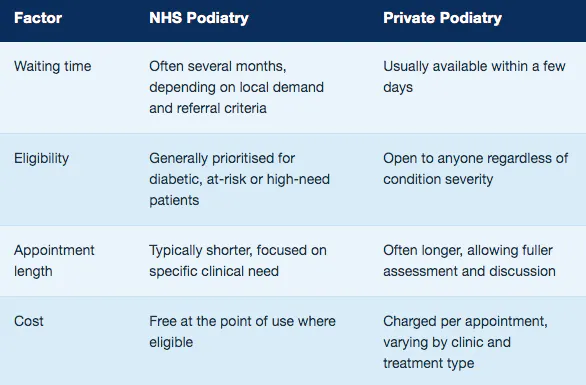
NHS vs Private Podiatry
Choosing between NHS vs private podiatry care often comes down to how quickly you need to be seen and whether your condition meets local NHS referral criteria.
- NHS podiatry is typically accessed through GP referral and prioritises diabetic and high-risk foot care
- Waiting times through the NHS vary by borough and current demand
- Private podiatry allows direct booking without a referral in most cases
- Private appointments generally offer more time for assessment and discussion
- Routine nail or skin care is rarely covered by the NHS
What Affects Appointment Pricing
Appointment pricing depends on factors including clinic location, appointment length, the practitioner's experience level and whether the visit involves diagnostic imaging or bespoke orthotics. Central London clinics often sit at the higher end of that range, reflecting higher running costs.
As a general guide, private MSK podiatry appointments across London commonly fall somewhere between £160 and £280, though complex assessments or follow-up treatment can cost more.
Red Flags When Choosing a Podiatrist
A handful of warning signs point to poor practice standards before you have committed to ongoing treatment. Watching for these during your first enquiry or appointment can save time, money and unnecessary discomfort.
- No HCPC registration number provided when asked directly
- No clear explanation of the diagnosis or proposed treatment plan
- Reviews repeatedly mention rushed or overbooked appointments
No HCPC Number Provided
A podiatrist who cannot or will not provide an HCPC registration number when asked is not legally entitled to use the title in the UK.
No Clear Treatment Plan Explained
A proper assessment should end with a clear explanation of what has been found and what treatment options follow, not vague reassurance alone. Our guide on what to expect from a podiatry appointment outlines what a thorough visit should look like.
Reviews Mention Rushed Appointments
Recurring mentions of rushed, overbooked or hurried appointments across multiple reviews often point to a clinic prioritising volume over individual care.
Frequently Asked Questions
What's the Difference Between a Podiatrist and a Chiropodist?
Podiatrist and chiropodist refer to the same regulated profession in the UK. Both titles require HCPC registration, and the qualifications, training and legal protections behind each name are identical. Podiatrist has become the more commonly used term over the past few decades, partly because it aligns with international naming conventions used across Europe, the US and Australia. Chiropodist is still used by some longer-established clinics or older patients, particularly for routine foot care such as nail and skin treatment.
How Do I Know if a Podiatrist Is Properly Qualified?
Check their HCPC registration number against the public register. The HCPC website allows a free search by name, confirming current registration status and any restrictions on practice. Beyond registration, a properly qualified podiatrist should hold a recognised degree in podiatry from a UK-accredited course and be willing to discuss their training, including any additional certifications relevant to your condition. Clinics that display registration details openly, rather than requiring you to ask, are generally more transparent about credentials.
Do I Need a Referral to See a Podiatrist in London?
No, most private podiatrists in London accept direct bookings without a GP referral. This differs from many NHS pathways, where access to podiatry often requires a referral from a GP or another healthcare professional, particularly for non-urgent conditions. Private clinics generally allow patients to book an initial assessment directly, which can shorten the time between noticing a problem and getting it looked at. NHS referral requirements vary by borough and local commissioning arrangements.
How Much Does a Private Podiatry Appointment Cost in London?
Costs vary, but many private podiatry appointments across London fall roughly between £160 and £280. The exact figure depends on the clinic's location, the length of the appointment, the practitioner's experience and whether additional diagnostics or treatments such as custom insoles are involved. Central London clinics often sit at the higher end of that range, reflecting higher overheads.
Always ask for a written price estimate before booking to avoid unexpected charges. If you have private health insurance they will often cover part if not all of the podiatry consultation.
Can I See an NHS Podiatrist for Free?
Yes, NHS podiatry is free at the point of use for patients who meet local eligibility criteria. Priority is generally given to patients with diabetes, circulation problems or other conditions that carry a higher risk of complications if foot problems go untreated. Access usually requires a GP referral, and waiting times vary by borough and current local demand. Patients with lower-risk, routine foot care needs may find NHS access more limited.
What Should I Bring to My First Podiatry Appointment?
Bring a list of your current symptoms, relevant medical history and any medication you take regularly. It also helps to bring the shoes you wear most often, particularly for sports or work, since footwear plays a direct role in many foot and ankle conditions. If you have had previous scans, X-rays or referral letters related to your condition, bringing copies along speeds up the initial assessment.
Comfortable clothing that allows easy access to your lower legs and feet is useful too. See our full breakdown of what to expect at your first podiatry appointment for a step-by-step guide.
How Do I Check if a Podiatrist Is HCPC Registered?
Search their name directly on the HCPC's online register, which is free and open to the public. The register shows current registration status, the profession registered under, and any restrictions placed on practice. Most reputable clinics display registration numbers on their website, though checking directly with the regulator remains the most reliable method.
If a name doesn't appear on the register, that person is not legally entitled to practise under the protected title.
HWhat Conditions Do Podiatrists Treat?
Podiatrists treat a wide range of foot and lower limb conditions, from ingrown toenails and verrucae to plantar fasciitis, bunions and sports injuries. Many also manage ongoing conditions such as diabetic foot care, arthritis-related foot pain and biomechanical issues affecting gait or posture. Some podiatrists specialise further in areas such as paediatric foot health, sports medicine or wound care, so the right practitioner often depends on the specific condition involved.
Learn more about our team and approach on our about us page, or get in touch via our contact page to book with FootFactor.