

Podiatry Appointment: What to Expect (2026 Guide)
Wednesday, July 29, 2026
Not sure what to expect from your first podiatry appointment? You're not alone. Most people don't know until they've been through one. The overall shape stays fairly similar from clinic to clinic: a conversation about your history, a hands-on examination of your feet and legs, then a plan you can act on. The specific details shift depending on what's actually wrong.
Here's what usually happens when you book a podiatry appointment, from arrival to the end of the visit. For a broader read on the topic, see our guide on what does a podiatrist do.
The Quick Answer: What Happens Step by Step
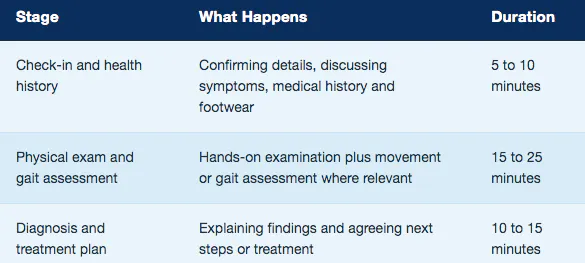
Ask five clinics how their appointments run and you'll get five slightly different answers. Even so, most follow three broad stages: gathering information, carrying out an examination, then agreeing a plan. A minor nail concern might move through all three quickly. Gait or biomechanical issues usually take longer, since there's more to assess — you can read more about when this is needed in our post on signs you need gait analysis. The table below sets out roughly how the time breaks down.
Check-in and Health History
Check-in usually takes five to ten minutes. Expect questions about your symptoms, your medical history, your activity levels, and the footwear you wear most often.
Physical Exam and Gait Assessment
The physical exam typically covers circulation, sensation, skin condition, and joint movement. When gait or biomechanics need assessing, this stage can extend to around twenty five minutes. This is often where the case for custom insoles or bespoke orthotics first comes up.
Diagnosis and Treatment Plan
Once the assessment is complete, most clinicians spend ten to fifteen minutes explaining what they've found. The treatment plan that follows is built around your specific situation rather than a generic template — whether that means 3D-printed orthotics, footwear advice, or ongoing foot care.
How Your Visit Differs by Reason for Referral
The reason behind your visit shapes the appointment more than people expect. A nail problem, a diabetes check and a sports injury are not handled in the same way. The three examples below cover common referral reasons and how each visit typically differs.
General Foot Pain or Toenail Problems
A toenail problem or general foot pain usually leads to a shorter, more focused visit. After discussing your symptoms and footwear, the clinician examines the affected area directly, checking the skin, the nail structure and any signs of infection or ingrowth — including concerns like thickened or deformed nails or corns and calluses.
Treatment on the day often includes nail cutting, treatment for corns, calluses or fungal nails, or a minor procedure for a persistent ingrown nail. Many of these concerns are resolved within a single appointment, though some require a follow-up.
Diabetic Foot Checks
A diabetic foot care check works differently from a standard appointment, since it focuses on screening rather than a specific complaint. The clinician checks circulation and sensation first, then examines the skin and nails, as early changes often appear there before anywhere else. Footwear is also reviewed, mainly to identify anything causing pressure or rubbing.
Because reduced sensation can mask a developing problem, this appointment often goes into more depth than a routine visit, even when nothing feels wrong day to day. Our foot care service covers this type of ongoing monitoring.
Sports Injury or Biomechanical Assessment
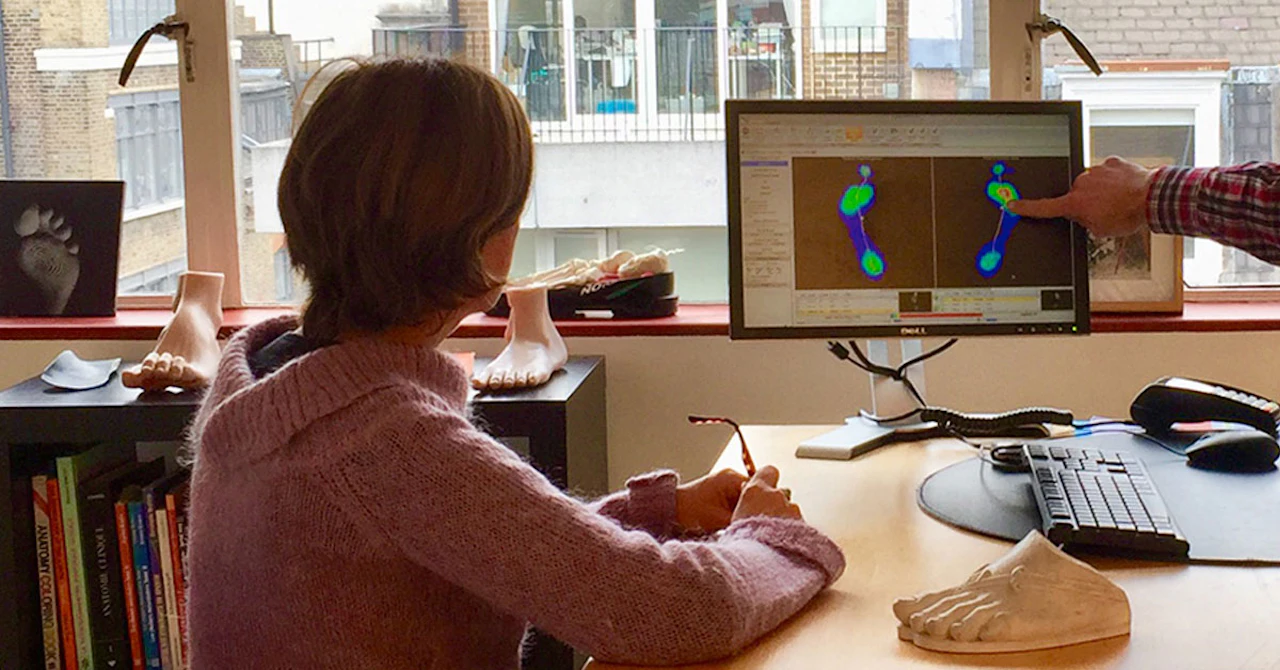
A sports injury or biomechanical concern usually calls for a closer look at how the foot moves, not just how it looks. This often includes gait analysis using pressure sensors and video to track how load travels through the foot and leg while standing, walking or running. Static and dynamic tests add further detail to that picture.
Common findings at this stage include overpronation, plantar fasciitis, or shin splints. Whatever this stage reveals usually shapes what comes next, whether that's running orthotics, exercise, further treatment or a combination of these.
What to Bring and How to Prepare
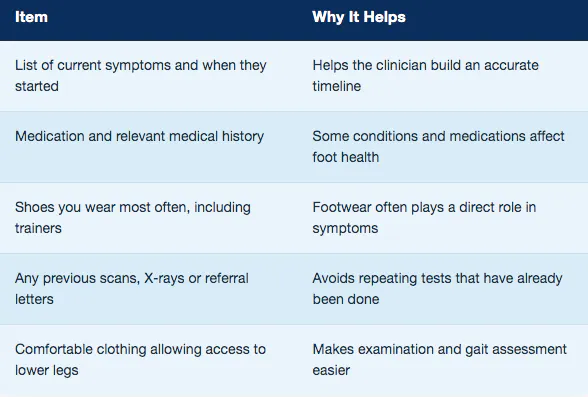
Turning up prepared helps the appointment run smoothly and gives the clinician a clearer picture from the start. The checklist below covers what's worth bringing, and the section that follows covers what's worth asking before you leave.
Documents, Footwear and Clothing to Bring
A few extra details are worth having ready beyond the checklist above.
- Insurance details, if your appointment is being claimed through a policy
- A short written note of your symptoms, in case it's difficult to recall every detail on the day
- More than one pair of regularly worn shoes, if different activities call for different footwear
- Details of any previous podiatry, physiotherapy or orthopaedic treatment related to the same issue
Questions Worth Asking Before You Leave
Before you leave, it helps to ask what the clinician believes is causing the problem and how confident they are in that assessment. It's also worth asking what happens if the first treatment doesn't fully resolve things, and roughly how long improvement usually takes to appear — our guide on what to expect from your orthotics appointment covers this in more detail. Confirming whether a follow-up appointment is needed, and what to do in the meantime, is a useful way to close out the visit.
Signs You're in Good Hands (Or Should Ask More)
Most podiatry appointments are run well and cover the ground properly. It still helps to know what that looks like from the patient's side. The following three signs are worth watching for:
- They explain findings in plain language
- They take a full health and footwear history
- The appointment isn't rushed
They Explain Findings in Plain Language
A clinician who explains findings in plain language, rather than relying only on clinical terms, is making sure you genuinely understand your diagnosis rather than simply agreeing with it.
They Take a Full Health and Footwear History
Questions about your medical history, activity levels and footwear, not just the area that hurts, suggest the assessment is considering the full picture rather than a single symptom in isolation. This is also where the difference between a chiropodist and a podiatrist can matter.
The Appointment Isn't Rushed
An appointment that leaves room for questions and a full explanation, rather than moving straight into treatment, usually reflects a more thorough assessment.
Ready for Your First Appointment? Book a Consultation
If you have a rough idea of what's wrong and want a clear diagnosis rather than more guesswork, booking a podiatry consultation with FootFactor is a reasonable next step.
Frequently Asked Questions
What Happens at a First Podiatry Appointment?
A first appointment usually begins with a conversation about your symptoms, medical history and footwear, followed by a physical examination of your feet and lower limbs. Depending on what that reveals, the clinician may add a gait or movement assessment. By the end of the visit, you'll have an explanation of what's going on and a treatment plan, which might include hands-on treatment, orthotics, exercises or a referral for further investigation.
How Long Does a Podiatry Appointment Take?
Most podiatry appointments last between thirty and forty five minutes, depending on the complexity of the concern. A routine nail or skin issue usually sits at the shorter end, while gait analysis or a biomechanical assessment typically takes longer. Some clinics combine assessment with same-day orthotics manufacture, such as our 3D-printed orthotics process, which can extend the visit closer to ninety minutes in total.
Do I Need a Referral to See a Podiatrist?
No, most private podiatrists accept direct bookings without requiring a referral from a GP. This differs from many NHS pathways, where a referral is often needed, particularly for non-urgent concerns. Booking privately, whether by phone or online, can shorten the time between noticing a problem and being seen. Referral requirements for NHS podiatry vary depending on where you live.
What Should I Not Do Before a Podiatry Appointment?
Avoid applying fresh nail polish or heavy moisturiser shortly before your appointment, as both can make it harder to examine the skin and nails properly. It also helps to avoid a pedicure involving cutting or filing in the days beforehand, particularly if nail or skin concerns are the reason for the visit. Clean feet are perfectly fine; just allow enough time for any polish or product to wear off first.
Will the Podiatrist Cut My Toenails?
It depends on the type of appointment. Nail cutting is included as part of routine foot care visits. Appointments focused on gait, biomechanics or sports injuries are usually assessment-led rather than treatment-led, so nail cutting may not be part of that visit unless it's specifically requested or clinically relevant. If nail care is the main reason for your visit, mention this when booking so the right appointment type is arranged.
What Should I Wear to a Podiatry Appointment?
Loose, comfortable clothing that allows easy access to your lower legs and feet works well, such as shorts or trousers that roll up easily. Bring the shoes you wear most often, particularly trainers if activity-related pain is the reason for your visit, since footwear often plays a direct role in the assessment. Avoid tight trousers that are difficult to roll above the knee if a gait assessment is likely.
Is a Podiatry Appointment Covered by the NHS?
Coverage depends on where you live and the reason for your visit. NHS podiatry is generally free at the point of use for patients who meet local eligibility criteria, though access and waiting times vary by area. Priority is usually given to patients with diabetes, circulation problems or other higher-risk conditions.
Private appointments are open to anyone, are usually quicker to book, and are charged per visit. Understanding the difference between NHS and private podiatry often comes down to weighing urgency against eligibility.
What Happens After My First Appointment?
What happens next depends on the treatment plan agreed during your appointment. Some concerns are resolved with self-care advice and no further visits needed. Others require follow-up treatment, a review appointment or a referral to another specialist. If orthotics or exercises were prescribed, a follow-up is often scheduled a few weeks later to check your progress — see our custom insoles vs off-the-shelf insoles guide for context. Keeping track of any advice given, particularly around footwear, helps you get the most from the appointment.
To learn more about our approach, visit FootFactor or read about us.