

Achilles Tendinopathy: Causes & Treatment | Foot Factor
Monday, October 12, 2026
Achilles Tendinopathy: Causes & Treatment
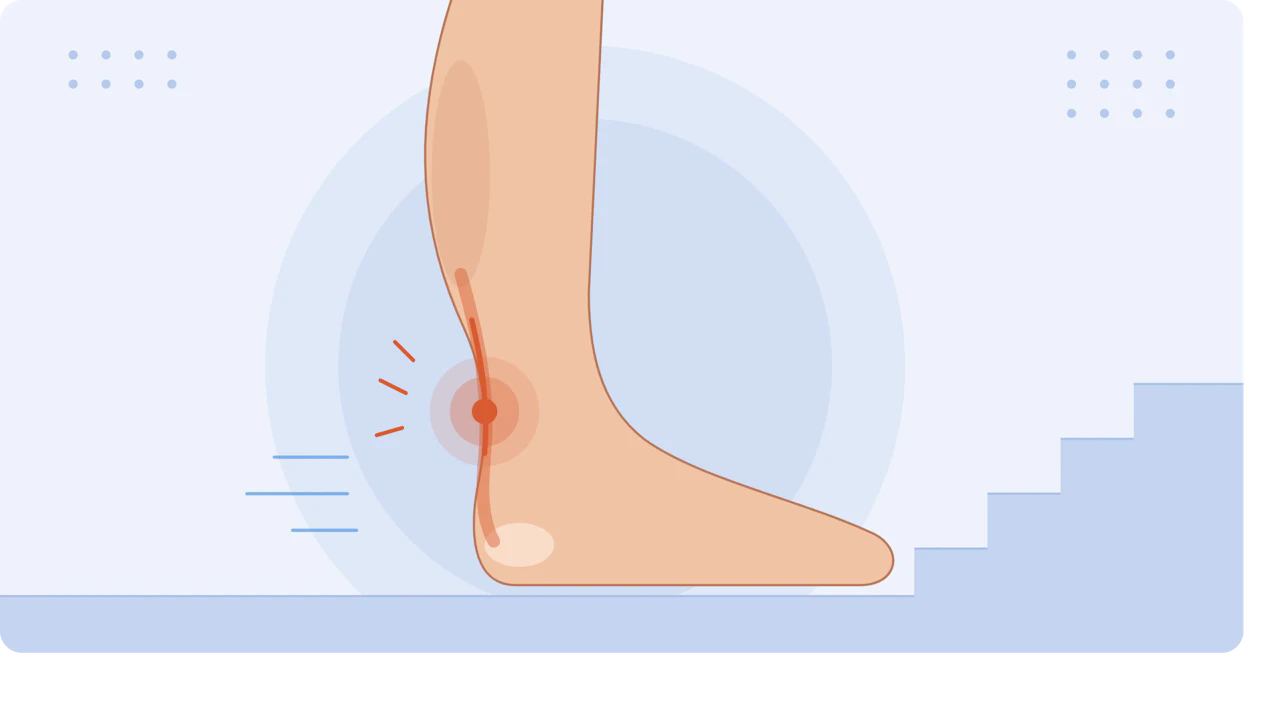
A sore Achilles tendon begins with something as ordinary as your first few steps feeling stiff or uncomfortable as you get out of the bed and then settles as you walk around. Particularly common in active adults and runners, these symptoms are often due to Achilles tendinopathy.
It is a common cause of pain around the back of the heel, and can be particularly frustrating as it often feels better after they warm up and then complain again later in the day. The discomfort can also happen when climbing stairs, walking uphill or running longer.
Choosing the right treatment starts with understanding the cause of the pain.
What Is Achilles Tendinopathy
The Achilles tendon connects your calf muscles to the heel bone. It transfers the force needed to push your foot off the ground, when walking, running, jumping, or rising onto your toes.
When it becomes painful and there’s a change in its structure and ability to handle load, it turns into a condition called Achilles tendinopathy. It develops gradually. First, the tendon feels tender to the touch, then stiff after rest. The pain worsens as you increase your activity.
Some call it Achilles tendonitis but they’re not the same. tendonitis suggests inflammation as the main issue while tendinopathy involves a wider range of tendon changes. That’s the main answer when it comes to questions about Achilles tendonitis vs tendinopathy. Both involve a different treatment plan as tendinopathy requires progressive strengthening rather than just minimising the swelling.
Another thing to consider is Achilles tendinopathy vs Achilles tendon rupture. Tendinopathy builds over time while a rupture involves a sudden tear during a forceful movement and needs immediate medical attention.
Insertional vs Midportion Tendinopathy
The location of the Achilles tendon pain varies. Knowing where it hurts helps determine whether you have insertional or midportion tendinopathy.
Midportion tendinopathy affects the section, about 2 to 6 cm above the heel, where the tendon attaches to the bone. It feels tender or thickened when squeezed.
Insertional tendinopathy affects the lower part where the tendon joins the heel bone. Activities that force that ankle into a deep stretch worsens the discomfort.
This difference affects the rehabilitation plan. An exercise to ease the pain at the insertion is different from the ones targeting the midportion.
The location of the pain helps when considering Achilles tendinopathy vs plantar fasciitis. Achilles problems usually cause pain behind the heel or higher up the tendon. Plantar fasciitis typically causes pain underneath the heel.
Symptoms and How It Typically Presents
Achilles tendinopathy symptoms are pain, stiffness, and tenderness in the tendon, often felt on rising in the morning after sitting for a while..
You’ll notice an unusual pattern if you exercise. It feels painful when you run or exercise then the discomfort eases when you warm up. It becomes sore again afterwards.
Symptoms of Achilles pain when walking are common especially when you go up stairs or hills.
What Causes Achilles Tendinopathy
The Achilles tendon’s main function is to handle heavy loads and help to propel you forwards during walking or running. But problems happen when it isn’t given time to adapt to repeated increased loads. This can happen suddenly or gradually. You may not even remember when the pain started.
Common factors include:
- Sudden training changes
- Weak or tired calf muscles
- Changes in footwear
- Foot mechanics
- Age
- Medical conditions such as diabetes
Overuse, Training Errors and Biomechanics
Achilles tendinopathy in runners often starts when there is a change in their training routine. This can be due to sudden increase in training volume (distance/time) or intensity.
You might feel fine handling the extra training without giving much thought about how your tendon adapts to the sudden change.
Movement patterns influence tendon loading too. How the force travels to your lower leg is affected by many things. Your foot position, ankle movement, calf strength and even your running technique play a role.
A running or gait assessment determines these factors. Easing the pain doesn’t always mean changing your running style. Small adjustments to your training volume or strengthening programme matters more than changing how you run.
Age, Footwear and Calf Tightness
Your body changes as you grow old and that applies to your Achilles tendon too. It’s less tolerant to increases in activity and recovery from repeated loading takes longer.
Footwear changes affect the workload on the tendon, too. Wearing flatter footwear after using high heels for a long time adds stress to your calf and Achilles.
Tight calf muscles and Achilles pain may also be related. If your calf isn’t that flexible, it affects how your ankle moves and how your Achilles is loaded when walking, running, or other activities. But it doesn’t mean that everyone who has Achilles pain has tight calves.
Medical Risk Factors
Some Achilles tendon problems have nothing to do with exercise or footwear.Some medical conditions can also increase the risk of tendon problems. These include inflammatory conditions such as psoriatic arthritis and ankylosing spondylitis, as well as gout and diabetes. Some medications have been associated with tendon problems, this is why your medical and drug history is important to discuss with your podiatrist at your initial assessment.
Evidence-Based Treatment Options
When you search for Achilles tendinopathy causes and treatment, you’ll find plenty of different approaches. They do not all have the same level of evidence.
For most people, rehabilitation centres around gradually loading the tendon. The aim is to improve its strength and capacity so it can handle the activities you want to return to.
Other treatments may be useful alongside exercise, particularly when symptoms have been persistent.
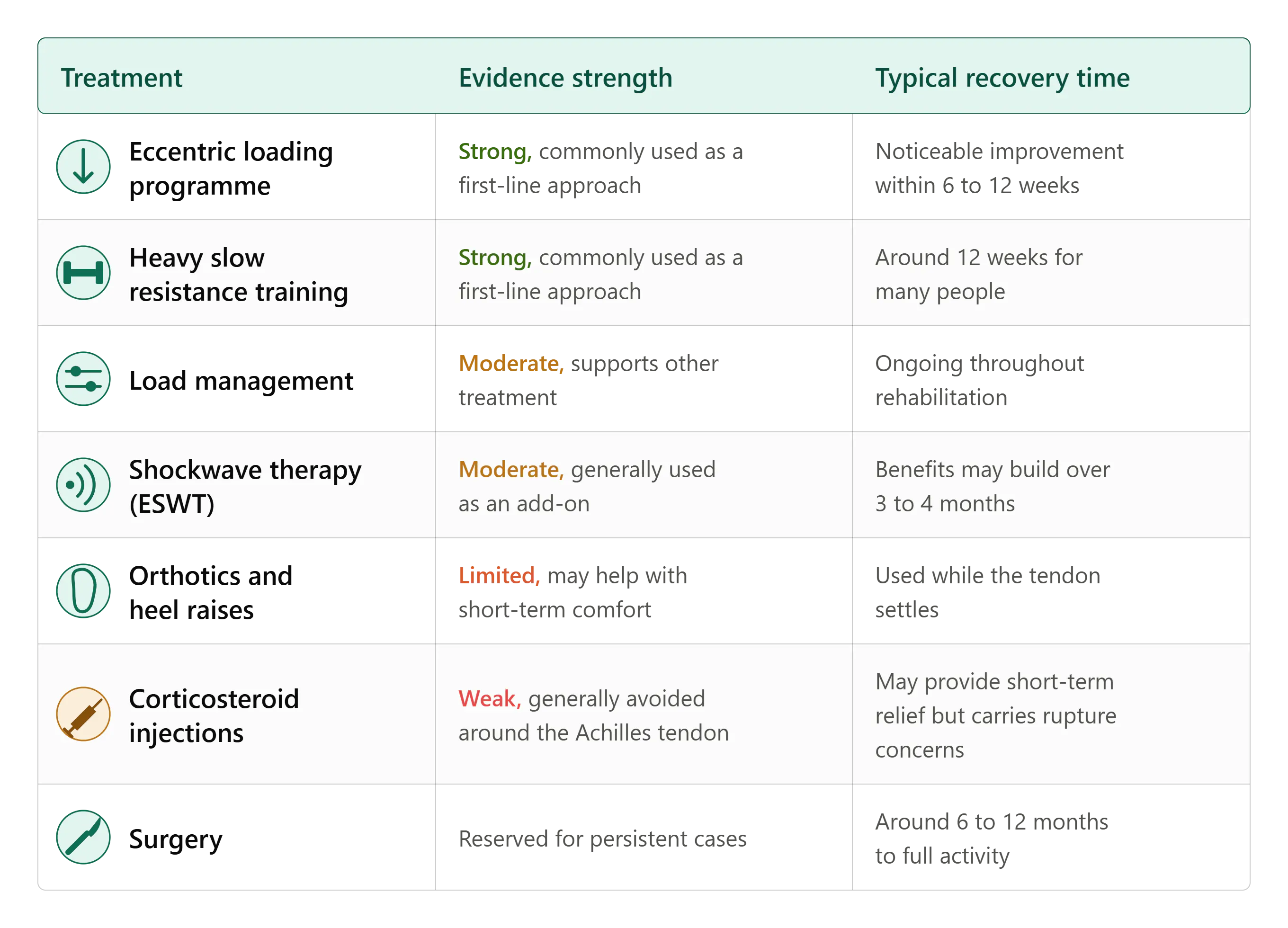
Eccentric Loading and Heavy Slow Resistance Exercise
Exercise is a major part of Achilles tendinopathy physiotherapy. The aim is not to keep the tendon completely pain-free. Instead, you gradually expose it to an appropriate level of load so it can become stronger and more capable.
Common Achilles tendinopathy exercises include:
- Eccentric heel drops: Rise onto your toes and then slowly lower the heel using the affected leg.
- Floor-level heel drops: These may be more suitable for insertional pain because they avoid dropping the heel below the level of the foot.
- Heavy slow resistance exercises: Standing and seated calf raises can be performed with progressively heavier resistance as your strength improves.
- Gradual progression: The amount of weight, repetitions or activity should increase progressively rather than changing dramatically from one session to the next.
Discomfort during exercise does not automatically mean you’re damaging the tendon. What happens afterwards is more useful. If your pain or stiffness is significantly worse the following morning, your current level of loading may need to be adjusted.
When Surgery or Specialist Referral Is Needed
Most people with Achilles tendinopathy can improve with appropriate rehabilitation. Some symptoms, however, warrant further assessment.
Speak to a GP, podiatrist, sports medicine clinician or orthopaedic specialist if:
- Your Achilles tendinopathy symptoms are not improving or are getting worse despite several months of consistent rehabilitation.
- You cannot put weight through the foot normally or cannot rise onto your toes.
- The area becomes hot, red and swollen, particularly if you also have a fever or feel unwell.
- Both Achilles tendons are painful and you also have pain or stiffness in other joints.
- Your symptoms began while you were taking a fluoroquinolone antibiotic.
A specialist can review your symptoms, medical history and activity levels and decide whether further testing is appropriate.
Red Flags Suggesting a Tendon Rupture
A sudden snap or pop in the back of the ankle or calf is different from the gradual pain associated with tendinopathy.
Some people describe it as feeling as though they’ve been kicked in the back of the leg. You may then struggle to push off through the foot, walk normally or stand on your toes.
If this happens, seek same-day medical attention. A suspected Achilles tendon rupture needs prompt assessment.
When Conservative Treatment Has Failed
Sometimes symptoms continue despite several months of appropriate rehabilitation.
If you’ve followed a structured loading programme, adjusted your activity and tried suitable additional treatments without enough improvement, a specialist may recommend further investigation.
An ultrasound or MRI scan may be considered when the diagnosis needs clarification or there is concern about the extent of the tendon changes.
What Surgical Treatment Typically Involves
Surgery is the last option. It’s considered only when non-surgical treatment doesn’t work and symptoms persist.
The affected spot in the tendon and the cause play a role in how the procedure goes. After the operation, there will be months of rehabilitation before you can return to your usual physical activities like running or jumping.
Concerned About Heel or Achilles Pain? Book an Assessment
If you have persistent pain behind your heel, you know how frustrating it is to do even the most ordinary activities. Walking, exercising, or even trying your favorite sport again feels uncomfortable. An assessment identifies what’s irritating your tendon and how much load it can handle.
Let our podiatrist assess your gait, foot mechanics, and tendon loading first. Then, we’ll put together a treatment plan that’s suitable for your symptoms and goals.
[Book Now]
Frequently Asked Questions
What causes Achilles tendinopathy?
It happens when your Achilles tendon gets exposed to load that it can’t normally handle. When you run longer than usual or go speed training, it triggers the discomfort. Footwear and even certain medical conditions become factors too.
What is the difference between Achilles tendinopathy and Achilles tendonitis?
tendonitis involves swelling while tendinopathy comes with tendon pain and structural changes. With tendinopathy, it’s all about persistent Achilles problems and inflammation doesn’t have anything to do with it.
What is the best exercise for Achilles tendinopathy?
Progressive calf strengthening is recommended. Experts suggest eccentric heel drops and heavy slow resistance exercises, which needs to be adapted depending whether it involves insertional or midportion pain.
Can Achilles tendinopathy heal without treatment?
For mild cases, reducing aggravating activities can help. But it doesn’t mean the symptoms go away completely. Gradually strengthening helps the tendon regain its strength and rebuild its capacity.
How long does it take to recover from Achilles tendinopathy?
Recovery takes several months and varies between patients depending on how long they had the symptoms, activity levels, and what they want to return to.
Should I rest completely if I have Achilles tendinopathy?
Complete rest is not necessary but it reduces symptoms temporarily. It is generally better to minimise activities that worsen your condition and perform suitable exercises.
When does Achilles tendinopathy need surgery?
Surgery is usually considered only when symptoms have not improved after a substantial period of appropriate non-surgical treatment. Most people with Achilles tendinopathy do not need an operation.
How can I tell if I’ve torn my Achilles tendon instead?
A rupture usually causes sudden pain, often with a snap or popping sensation. You may feel as though you’ve been kicked in the back of the calf and may struggle to walk, push off or stand on your toes. A suspected rupture needs a same-day assessment.