

High Arches: Symptoms and Treatment
Friday, August 28, 2026
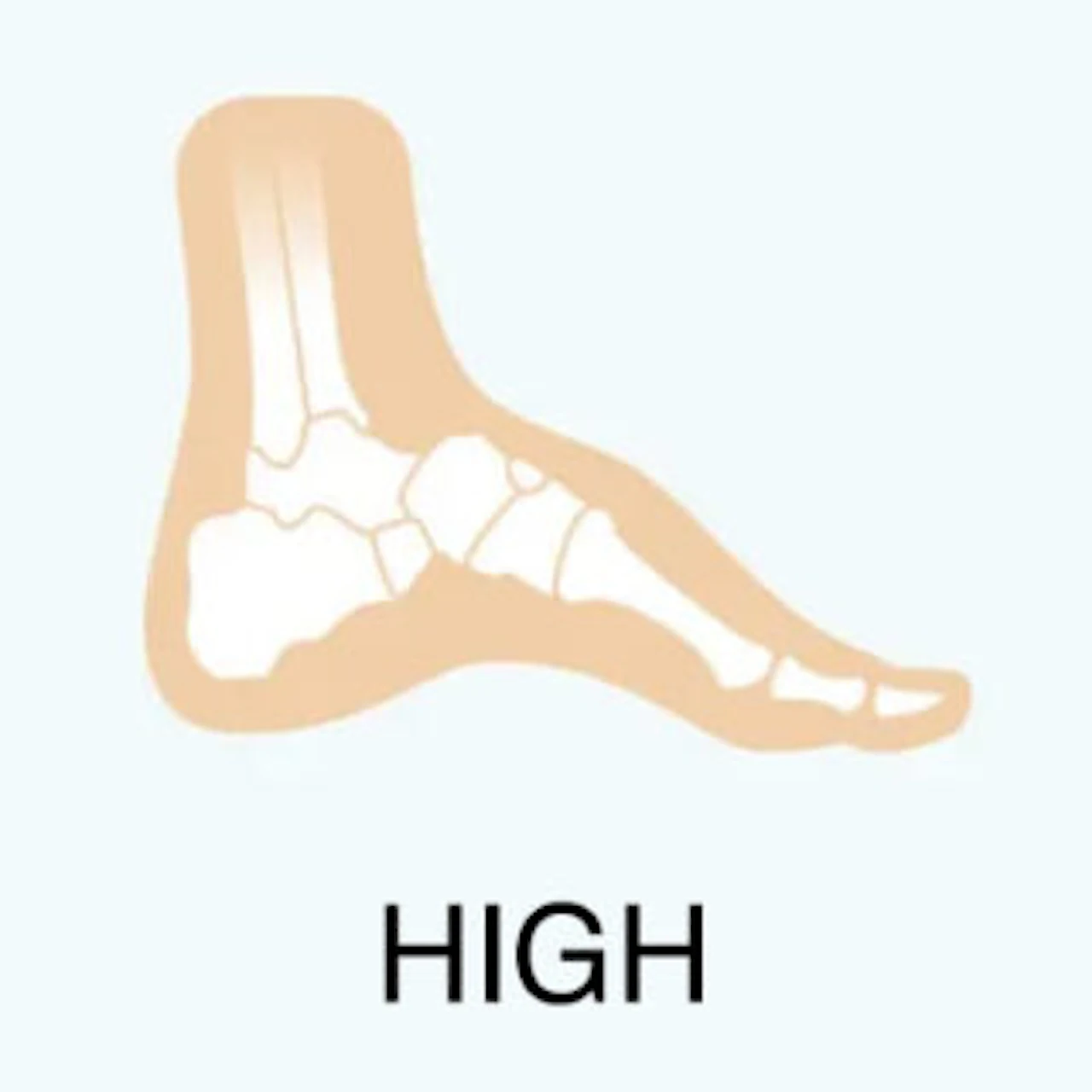
Do your feet ache along the outer edge no matter how supportive your shoes are, or do your ankles seem to roll often? Maybe you have high arches that change how weight moves through the foot with every step you take. Recurring sprains, pain under the ball of your foot, or shoes that never fit right are common signs, and this guide from Foot Factor covers the possible causes and treatment options.
What Are High Arches?
High arches, known clinically as pes cavus, is a foot structure where the arch sits higher than normal, leaving less of the sole in contact with the ground. It affects how your foot absorbs shock and distributes weight, placing extra pressure on your heel and ball of the foot. It's either a lifelong structural trait or something that develops gradually due to an underlying condition.
How High Arches Differ From a Normal Arch
A normal arch flattens slightly and flexes under load, spreading weight evenly across the sole with each step. High arches stay rigid through this movement, concentrating pressure onto smaller areas of the foot.
How Common Are High Arches
High arches affect roughly one in twenty people. Many cases are mild and cause no functional problems, while others lead to persistent pain or repeated injury.
When High Arches Need Medical Attention
Sudden changes in arch height, numbness, or worsening arches call for proper assessment to determine if there's an underlying neurological cause that benefits from early diagnosis and appropriate referral.
Symptoms of High Arches
High arch foot pain varies depending on activity levels, footwear, and rigidity of the arch. Some people feel some discomfort only during exercise, while others feel it while walking.
Watch out for these common and recognisable patterns:
Foot Pain and Instability
Pain is often felt under the heel and ball of the foot, since these areas absorb most of the pressure when the arch cannot flex properly. Many people feel as though their foot is less steady and more noticeable on uneven surfaces or during faster movement. Over time, the discomfort can spread into the calf or lower leg as the body compensates.
Frequent Ankle Sprains
High arches and ankle sprains are a common combination for those who love running or court sports. Repeated ankle sprains must be addressed right away so it doesn't progress to a point where the joint no longer feels stable when walking normally. When this happens, you'll need to undergo chronic ankle instability treatment.
Calluses, Hammertoes, and Uneven Shoe Wear
Calluses, claw, and hammertoes develop when the heel and ball of the foot constantly handle excess pressure. Shoes along the outer sole wear out faster, as raised arches cause uneven pressure distribution. These changes happen gradually so pain and discomfort prompts affected individuals to check their footwear.
What Causes High Arches
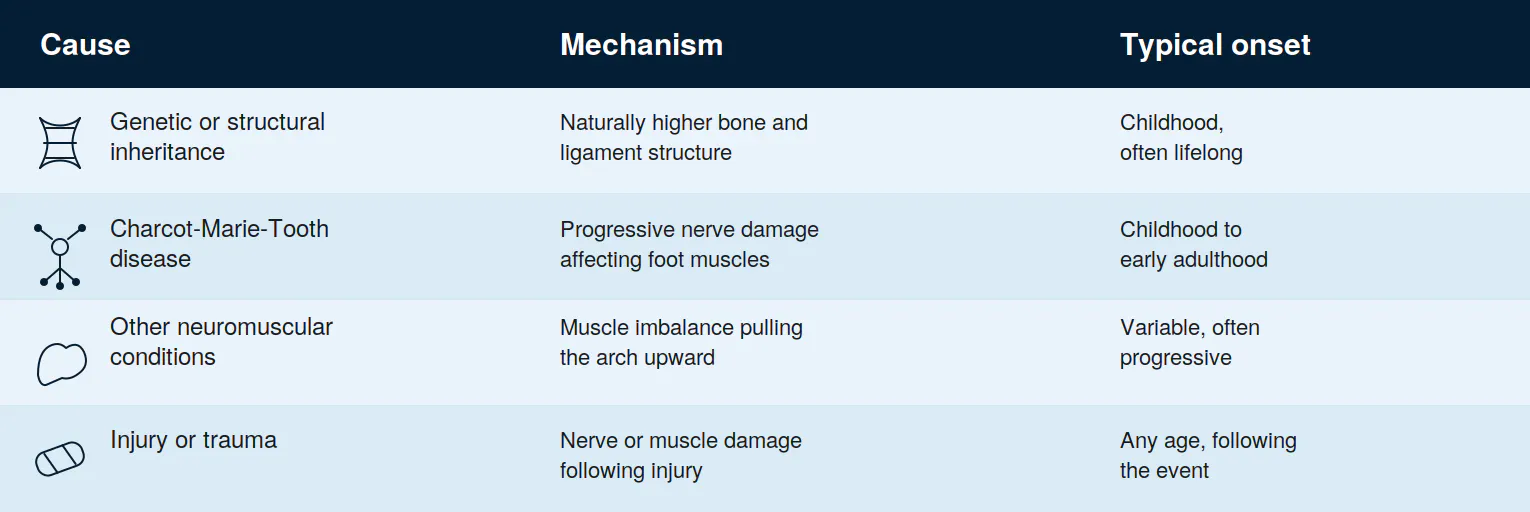
High arches develop for a mix of structural and neurological reasons. Identifying the root cause matters for treatment planning.
Genetic and Structural Causes
Are high arches genetic? For most people, they're inherited, passed down through family structure without any underlying medical condition involved.
Neurological Causes (e.g. Charcot-Marie-Tooth)
A smaller proportion of cases stem from neurological conditions such as Charcot-Marie-Tooth disease, an inherited disorder that gradually affects the nerves controlling the foot and lower leg muscles. This type progresses over time and comes with other signs, such as weakness or changes in sensation. Recognising these signs early allows for the right referral pathway and avoids treating a progressive condition as a purely mechanical one.
High Arches Treatment Options
Treatment starts with supportive measures without requiring an operation. The right plan depends on how much the arch affects daily comfort, whether ankle instability is a factor, and if there's an underlying neurological cause, which needs separate management.
Non-Surgical Treatment (Orthotics, Supportive Footwear, Bracing)
Custom orthotics, cushioned footwear, and ankle bracing resolve symptoms for most people with high arches, without any need for surgical intervention. See our custom insoles options built for raised arch support.
- Supportive footwear and custom orthotics for high arches to improve shock absorption and redistribute pressure
- Bracing to support the ankle for instability or recurring sprains
- High arch exercises to strengthen the muscles supporting the foot and ankle
- Surgical correction, reserved for severe or progressive cases where conservative treatment has not worked
When Surgery Is Recommended
Surgery is reserved for severe or progressive cases, where a neurological cause is driving continued deterioration despite traditional care.
Home Care and Stretching Exercises
Regular calf and foot stretches, paired with balance training, help improve stability and reduce strain on the outer foot over time.
Not Sure If Your High Arches Need Treatment?
A thorough biomechanical assessment shows exactly how your high arches are affecting your gait, and whether custom orthotics for high arches or another approach — explore our orthotics & insoles range — fits your situation best. Booking a free consultation with a podiatrist in London gives you a clear picture of your foot mechanics along with a tailored plan, whether that means orthotics, bracing, or a referral for further investigation. Call now to book your assessment and start moving with more comfort and stability.
FAQs
What are the symptoms of high arches?
Pain in heel and ball of foot, instability, frequent ankle sprains, calluses and hammertoes are common. Symptoms vary depending on various factors like arch rigidity and level of physical activity.
What causes high arches?
Root causes are either inherited structural traits or from rare neurological conditions such as Charcot-Marie-Tooth disease.
Can high arches be corrected?
Reshaping is highly unlikely but symptoms are manageable. For structural cases, treatment focuses on redistributing pressure and improving stability. Neurological cases need ongoing monitoring alongside symptom management.
Are high arches hereditary?
Yes, some high arches run in families and come with no underlying medical condition involved.
Do high arches cause pain?
Yes, but not everyone experiences pain. Many people manage comfortably with supportive footwear alone. Pain tends to become more likely with increased activity levels or when the arch is more rigid and pronounced.
What is the best treatment for high arches?
There is no single universal treatment but the most effective approach usually combines supportive footwear, custom orthotics, and targeted exercises tailored to the individual. A proper assessment helps identify which combination will bring the most consistent relief.
Do high arches need surgery?
Surgery remains as the last resort. It only becomes a consideration in severe or progressive cases that worsen despite conservative treatment.
What's the difference between high arches and flat feet?
High arches and flat feet sit at opposite ends of the arch spectrum, with high arches showing a raised, rigid arch and flat feet showing little to no arch at all — see our guide to arch support for flat feet.
A podiatry assessment identifies which pattern applies and the most suitable treatment approach. This is also closely tied to gait patterns discussed in is under/over pronation the cause of running injuries.