

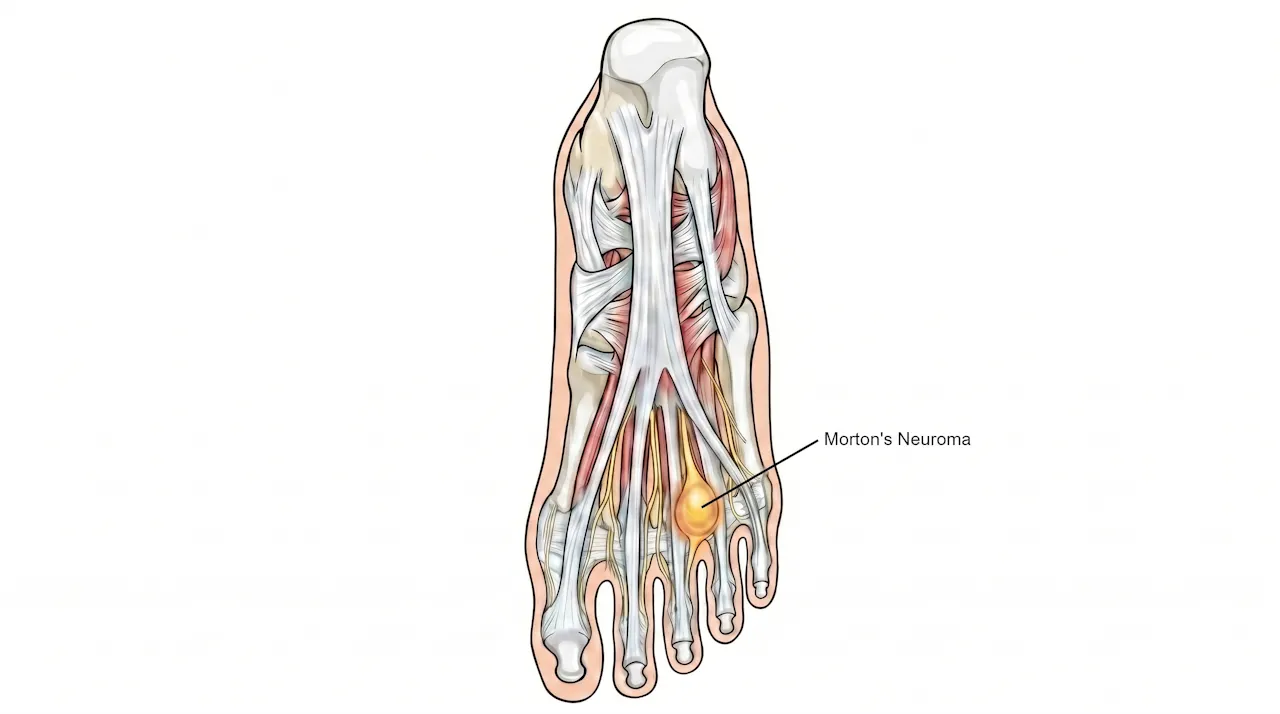
Morton's Neuroma
Morton's Neuroma is a painful condition affecting one of the nerves that runs between the toes, most commonly between the third and fourth toes.
Overview
What is it?
The condition occurs when the tissue surrounding the nerve becomes thickened and irritated, leading to compression of the nerve and symptoms such as pain, burning, tingling, and numbness in the forefoot. Despite its name, Morton's Neuroma is not actually a tumour. It is a benign enlargement of nerve tissue caused by repetitive irritation and compression.
Morton's Neuroma can significantly affect walking, exercise, and footwear comfort, particularly when left untreated.
How common is it?
Morton's Neuroma is one of the most common causes of forefoot pain. It is more frequently diagnosed in women than men and typically affects adults between the ages of 30 and 60.
The condition often develops gradually and may initially be mistaken for a simple foot strain or footwear-related discomfort.
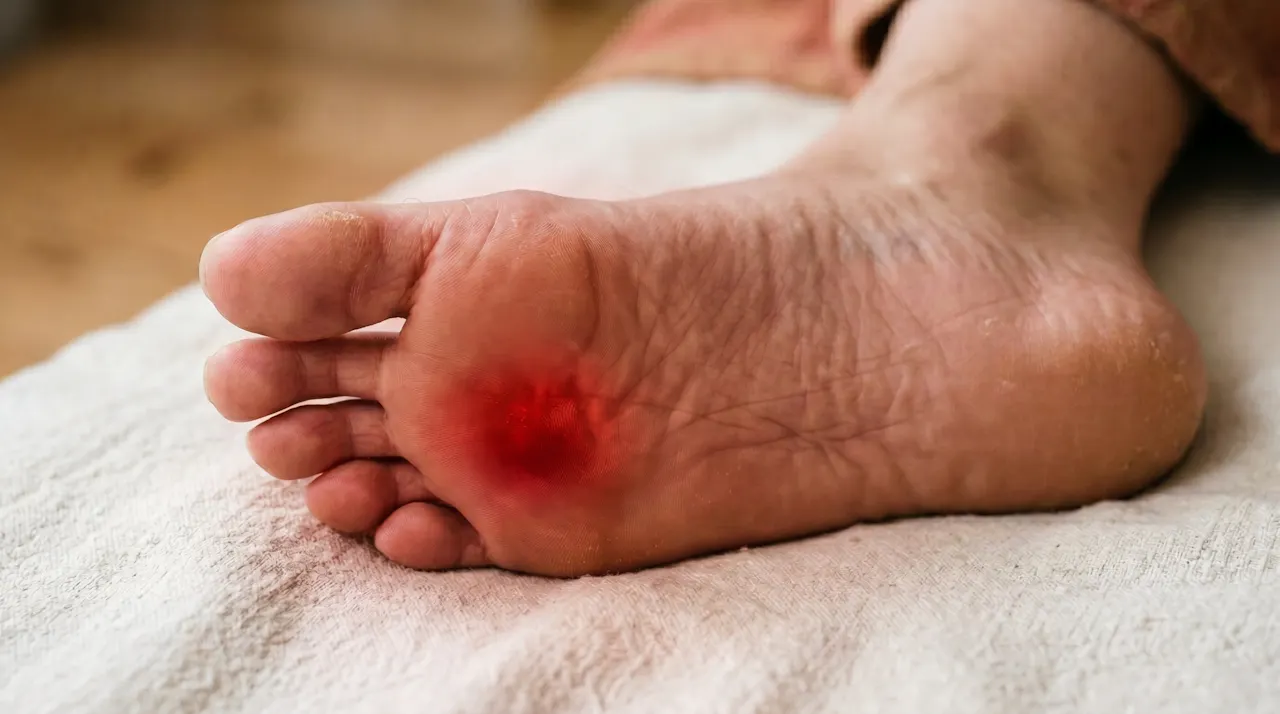
Symptoms & Causes
What are the symptoms?
Symptoms can vary depending on the severity of nerve irritation.
Common symptoms include:
- Burning pain in the ball of the foot
- Sharp or shooting pain radiating into the toes
- Tingling or pins and needles in the toes
- Numbness in the affected toes
- A sensation of standing on a pebble or folded sock
- Pain that worsens when walking or wearing tight footwear
- Relief when shoes are removed or the foot is massaged
Symptoms may come and go initially but often become more persistent over time.
What does it feel like?
Many patients describe the sensation as if there is a small stone stuck beneath the ball of the foot. Others experience burning, stabbing, or electric shock-like pain that radiates into the toes.
The discomfort is often aggravated by prolonged walking, running, high heels, or footwear that compresses the forefoot.
What causes it?
Morton's Neuroma develops when excessive pressure or repetitive irritation affects one of the nerves between the metatarsal bones.
Common contributing factors include:
- Tight or narrow footwear
- High-heeled shoes
- Excessive forefoot loading
- Flat feet
- Excessive pronation
- High arches
- Running and impact sports
- Biomechanical abnormalities
- Toe deformities such as bunions or hammertoes
Over time, repeated irritation causes the nerve tissue to thicken, increasing compression and symptoms.
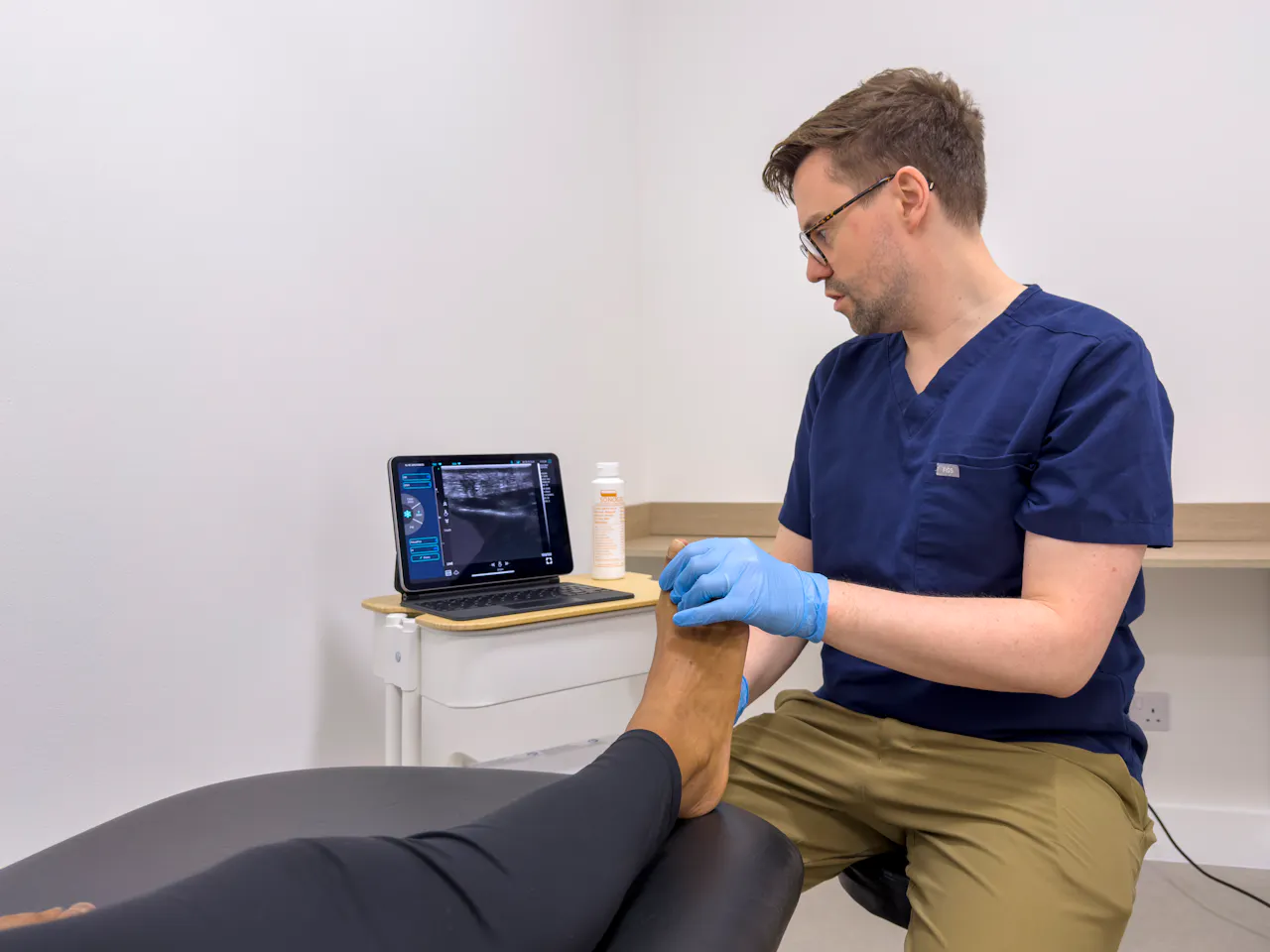
How is it Diagnosed?
What tests are used to diagnose it?
1. Clinical History
Your podiatrist will discuss:
- The location of your symptoms
- When symptoms occur
- Activities that aggravate the condition
- Footwear habits
- Sporting activities
- Previous treatments attempted
2. Physical Examination
Assessment may include:
- Palpation of the affected area
- Evaluation of forefoot alignment
- Examination of foot posture
- Assessment of nerve irritation signs
- Identification of areas of tenderness
- Functional movement assessment
Certain examination techniques may reproduce symptoms and help confirm the diagnosis.
3. Gait & Biomechanical Analysis
At Foot Factor, a detailed biomechanical assessment helps identify the underlying factors contributing to excessive nerve compression.
This may reveal:
- Excessive pronation
- Forefoot instability
- Altered pressure distribution
- Poor lower limb mechanics
- Increased loading beneath the metatarsal heads
Addressing these factors is often essential for long-term symptom relief.
Foot Factor provides Expert Podiatry Treatment Tailored to You.
At Foot Factor, our podiatrists specialise in diagnosing and treating foot pain with precision and expertise. With advanced gait analysis, bespoke orthotics, and sports-focused podiatry care, we don’t just identify the problem—we provide a targeted solution to get you back to moving pain-free. Book a consultation today and take the first step toward lasting relief.


How is it Treated?
Treatment depends on symptom severity, duration, and contributing biomechanical factors.
Conservative Treatment Options
Many cases respond successfully to non-surgical treatment.
Treatment may include:
- Comprehensive biomechanical assessment
- Custom orthotic therapy
- Footwear modification
- Padding and offloading techniques
- Activity modification
- Load management strategies
- Rehabilitation exercises where appropriate
- Injection Therapy
Custom Orthotics
Custom orthotics can help reduce excessive pressure beneath the forefoot and improve foot mechanics.
Benefits may include:
- Reduced nerve compression
- Improved weight distribution
- Reduced forefoot loading
- Increased walking comfort
- Enhanced stability
- Improved long-term symptom control
For many patients, orthotic therapy forms a key component of successful management.
Our Bespoke Orthotics give you the Right Support for Long-Term Relief.
At Foot Factor, our podiatrists specialise in diagnosing and treating foot pain with precision and expertise. With advanced gait analysis, bespoke orthotics, and sports-focused podiatry care, we don’t just identify the problem—we provide a targeted solution to get you back to moving pain-free. Book a consultation today and take the first step toward lasting relief.
Related Articles
Find expert tips, advice, and insights to support your foot health and active lifestyle.